Traffic Control Police Wing
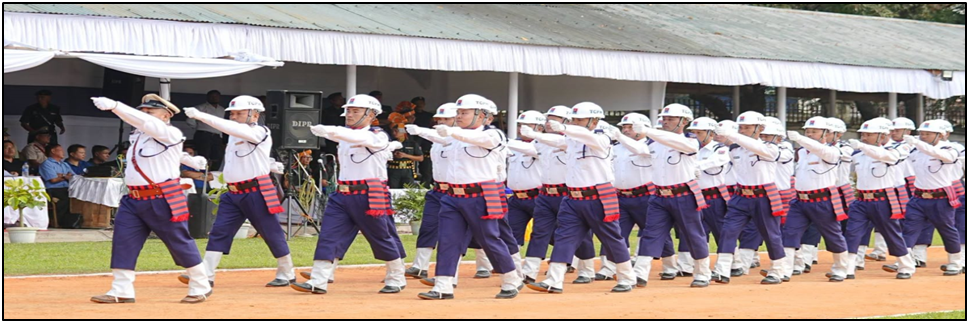
The Traffic Control Police Wing (TCPW), Manipur, is a specialised police wing responsible for traffic regulation, management, enforcement of traffic laws, and road safety awareness in the state. With the steady growth of vehicular traffic and increasing urbanisation, particularly in Imphal, the Wing has evolved to meet the challenges of maintaining smooth traffic flow, reducing congestion, ensuring road safety, and facilitating the safe movement of commuters and other road users.
Historical Background
Prior to 1970, there was no separate Traffic Police unit in Manipur. Initially, selected police personnel from Imphal Police Station and subsequently from the Town Control Room were detailed to regulate traffic in the congested areas of Imphal. These personnel were deployed at important traffic points, particularly Kangla Western Gate, Charlie (formerly known as the Western Assam Rifles Gate), Bazaar Charlie, NityapatChuthek, Keishampat, and other busy locations. They performed their traffic regulation duties wearing khaki uniforms with white armbands for identification.
In 1970, a separate Traffic Control Police unit was established at its present location on M.G. Avenue, Imphal, under the command of a Sub-Inspector. Since its inception, the unit has gradually developed in terms of manpower, organisational structure, operational capabilities, and enforcement mechanisms in response to the growing traffic management requirements of the state capital.
In 2017, the Traffic Control Police Wing, Manipur, was established as a dedicated wing for managing traffic in Imphal West and Imphal East districts. The organisational structure initially provided for one Superintendent of Police (SP/TCPW) and one Additional Superintendent of Police (Addl. SP/TCPW).
A significant development took place in December 2025, when an order issued by the Home Department, Government of Manipur, in the Manipur Gazette provided for the bifurcation and allocation of manpower from Imphal West and Imphal East districts to the Traffic Control Police Wing (TCPW), Manipur. Following this reorganisation, the sanctioned or allocated manpower strength of the TCPW increased from 2 to 552, as per the relevant order. This expansion marked a major step towards strengthening traffic management operations and establishing a more comprehensive administrative and operational framework for Imphal West and Imphal East.
Organisational Structure and Administration
The Traffic Control Police Wing, Manipur, is headed by a Superintendent of Police (SP/TCPW), who is responsible for the overall supervision, administration, planning, coordination and operational management of the Wing. The SP is assisted by two Additional Superintendents of Police (Addl. SPs). Traffic administration at the district level is supported by Traffic Inspectors, with one each assigned to Imphal West and Imphal East, while the TCPW Headquarters is supported by a Deputy Superintendent of Police (DSP).
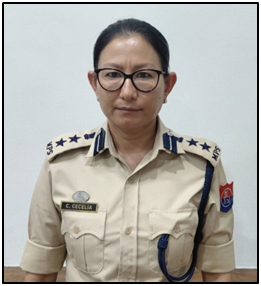 |
| Ms.Chiphang Cecelia Sopemla, MPS Superintendent of Police, Traffic Control Police Wing, Manipur |
This organisational arrangement facilitates coordination between the Headquarters and district offices, enabling effective deployment of personnel, enforcement of traffic regulations, management of congestion, and implementation of road safety initiatives.
Office locations:
- TCPW Headquarters: Old Police Headquarters (PHQ), Babupara, Imphal.
- Imphal West Office: M.G. Avenue, Thangal Bazar, Imphal.
- Imphal East Office: Police Campus, Porompat, Imphal East.
Manpower Strength
The increase in manpower has strengthened the operational capacity of the Traffic Control Police Wing and enabled the deployment of personnel across major junctions, congested locations, mobile units, and specialised traffic management teams.
The detailed manpower strength of TCPW, including its supervisory officers, district-wise deployment and other ranks, will be presented in the table below.
Traffic Regulation and Specialised Operational Teams
To ensure smooth traffic movement and effective management of congestion, the Traffic Control Police Wing deploys personnel through a range of specialised teams according to operational requirements. These teams work in coordination to regulate vehicular movement, manage busy junctions, facilitate emergency and priority movements, and maintain order on the roads.
The principal operational teams and units include:
___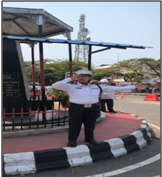 | ___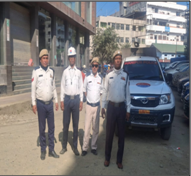 | ____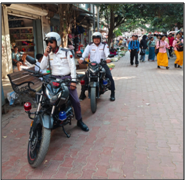 | ___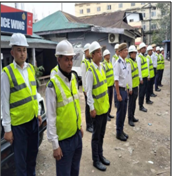 |
| Junction Teams | Mobile Vehicular Team | Patrol Bike Team | Baton Light Team |
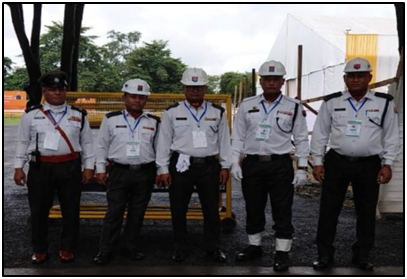 | _______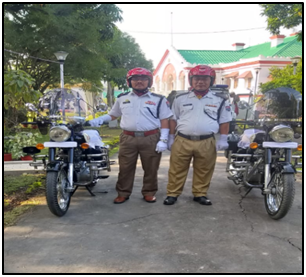 |
Specialised VVIP Traffic Team Bullet Riders for the Carcade of H.E. the Governor of Manipur
Traffic Enforcement and E-Challan System
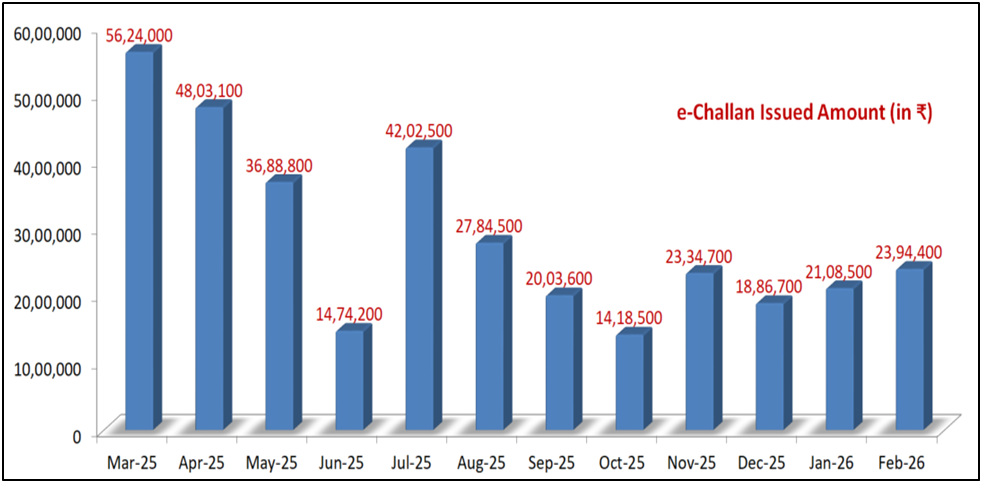
The Traffic Control Police Wing has modernised its traffic enforcement mechanism by transitioning from the traditional paper-based challan system to the electronic challan (e-challan) system. This paperless process supports more efficient documentation of traffic violations, improves record management, and promotes transparency and accountability in enforcement.
The SP/TCPW serves as the overall nodal officer for e-challan-related activities across all districts of Manipur. For effective implementation and coordination, designated administrative personnel in each district assist with e-challan-related activities.
The Wing continues to strengthen the implementation of the Motor Vehicles Act and applicable traffic rules through regular enforcement drives, monitoring of violations, and the use of technological equipment.
Equipment and Technological Support
The Traffic Control Police Wing is equipped with various tools and devices to support traffic regulation, enforcement, and road safety operations. These include wheel clamps for dealing with vehicles in accordance with applicable rules, baton lights for visible traffic signalling, breath analysers for detecting alcohol-impaired driving, and speed guns for monitoring vehicle speeds.
In addition, CCTV cameras installed across Imphal city provide valuable support for traffic monitoring and the identification of congestion-prone locations. CCTV-based monitoring assists the Wing in assessing traffic conditions, coordinating field deployments, and taking appropriate measures to improve traffic flow and public safety.
The use of these equipment and technological resources enhances the effectiveness of traffic enforcement and supports a more responsive approach to urban traffic management.
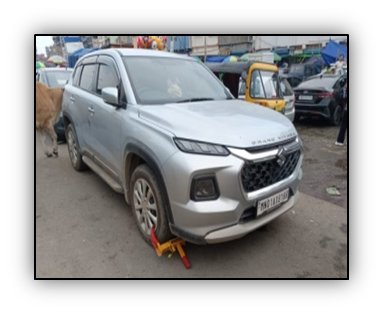
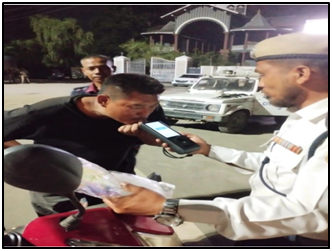
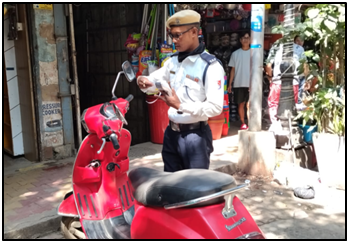
Photographs of the utilisation of the equipment during traffic enforcement.
Training and Capacity Building
Training and capacity building are important components of the Traffic Control Police Wing’s efforts to improve professional competence and operational efficiency. Training programmes are conducted for TCPW personnel and other relevant personnel to strengthen their knowledge and skills in traffic regulation, enforcement procedures, road safety, use of equipment, and management of traffic-related situations.
These initiatives aim to ensure that personnel remain prepared to address emerging traffic challenges and carry out their duties efficiently, professionally, and in accordance with applicable laws and procedures.
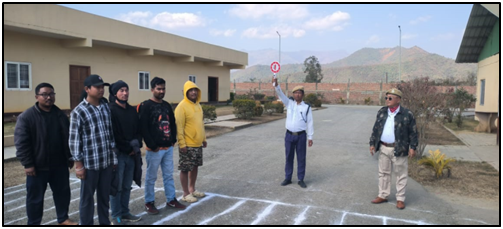
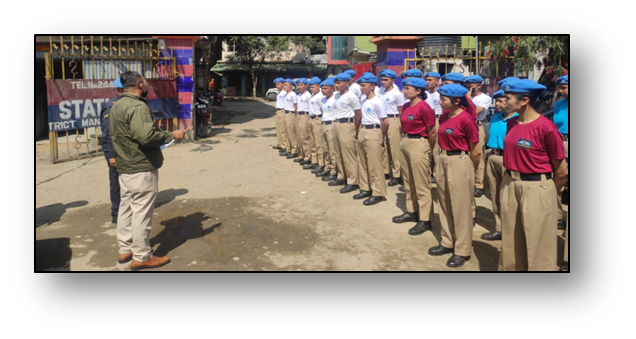
Photographs of the training being imparted.
Road Safety Awareness and Public Outreach
The Traffic Control Police Wing recognises that effective traffic management requires not only enforcement but also public cooperation and awareness. Accordingly, the Wing regularly undertakes road safety awareness activities targeting school students, drivers, commuters, and the general public.
Awareness initiatives include educational videos, road shows, school outreach programmes, public awareness campaigns, and activities organised during Road Safety Month. These programmes seek to promote responsible driving, observance of traffic rules, use of helmets and seat belts, prevention of drunken driving, pedestrian safety, and a greater sense of responsibility among road users.
Through these activities, TCPW endeavours to foster a culture of road safety and encourage voluntary compliance with traffic regulations.
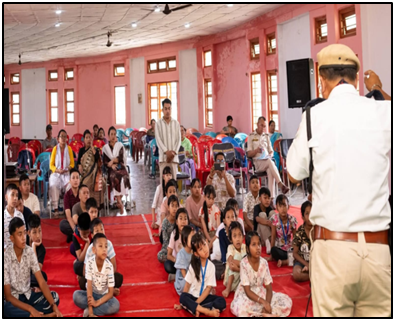
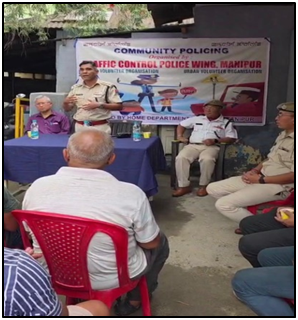
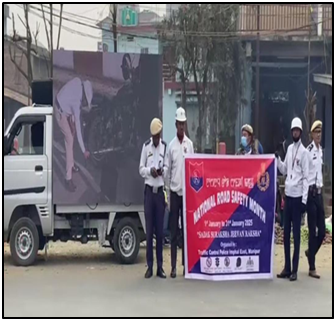
Photographs of traffic awareness programmes, road shows and Road Safety Month activities.
Digital Communication and Public Information
To improve communication with the public, the Traffic Control Police Wing has established its own social media presence. Through these platforms, the Wing disseminates timely information regarding traffic congestion, traffic advisories, diversions, special traffic arrangements, and other relevant public notices.
These digital communication channels help road users plan their journeys, remain informed about changing traffic conditions, and cooperate with traffic personnel during special events and periods of heavy congestion.
The Wing continues to use public communication as an important means of promoting transparency, facilitating public cooperation, and improving the overall traffic management experience in Imphal.
Facebook Link – https://www.facebook.com/people/Traffic-Control-Police-Wing-Manipur/61595355432841/